
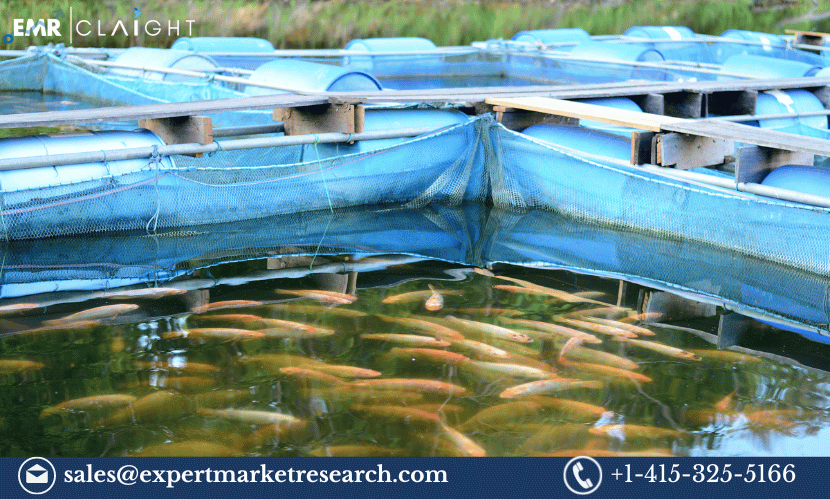
Fish farming is becoming an increasingly important part of the global food system as demand for seafood continues to rise. Aquaculture enables fish and other aquatic species to be produced in controlled environments, helping supplement wild fisheries and provide a consistent source of food. However, the industry is also facing challenges related to water availability, feed costs, disease management, environmental impact, and climate change.
Technology is playing an increasingly important role in addressing these challenges. From automated feeding systems and water-quality sensors to artificial intelligence, recirculating aquaculture systems, and renewable energy, modern fish farms are becoming more efficient and data-driven. According to Expert Market Research, the global fish farming market reached USD 342.86 billion in 2025 and is projected to grow at a CAGR of 5.70% between 2026 and 2035, reaching approximately USD 596.85 billion by 2035.
Growing Demand Is Reshaping Fish Farming
Population growth, urbanisation, and changing dietary preferences are supporting demand for seafood. Fish provides high-quality protein along with important nutrients, making it an attractive part of diets in many regions.
At the same time, pressure on wild fish populations has increased interest in aquaculture. Fish farming can provide a more controlled method of production, allowing farmers to manage feeding, stocking, water quality, and harvesting.
The industry is therefore moving from traditional farming practices toward more controlled and technology-driven production models.
Smart Fish Farms Are Using Connected Technology
One of the most important trends in aquaculture is the adoption of smart farming technologies. Sensors can continuously monitor parameters such as temperature, dissolved oxygen, pH, salinity, and ammonia levels.
These measurements provide farmers with real-time information about water conditions. If a parameter moves outside the desired range, automated systems can trigger alerts or adjust equipment such as aerators, pumps, or filtration systems.
Internet of Things (IoT) technology can connect these devices and allow farmers to monitor multiple aspects of production through centralised platforms. This can improve decision-making while reducing the need for constant manual monitoring.
Artificial Intelligence Is Improving Farm Management
Artificial intelligence and machine learning are emerging as valuable tools for modern fish farming. AI systems can analyse large amounts of data collected from sensors, cameras, and farm-management platforms.
Computer vision technologies can help monitor fish behaviour, estimate biomass, identify unusual activity, and detect potential health problems. Early identification of abnormal behaviour can allow farmers to investigate potential disease or environmental issues before they become widespread.
AI can also support feeding decisions. Instead of relying entirely on fixed feeding schedules, intelligent systems can analyse fish activity and environmental conditions to determine when and how much feed should be provided.
Automated Feeding Is Reducing Feed Waste
Feed is one of the largest operating costs in many fish farming operations. Overfeeding can increase costs while also degrading water quality because uneaten feed accumulates in the farming environment.
Automated feeding systems can deliver feed according to predetermined schedules or real-time data. More advanced systems can use cameras, sensors, and AI to estimate feeding activity and adjust feed quantities.
Improving feed efficiency can reduce waste, lower operating costs, and support better environmental outcomes. This makes intelligent feeding an important area of technological development in aquaculture.
Recirculating Aquaculture Systems Are Gaining Attention
Recirculating aquaculture systems (RAS) are designed to reuse and treat water rather than continuously replacing large volumes of it. Water passes through filtration and treatment systems before being returned to the fish tanks.
This approach can significantly reduce water requirements compared with some conventional systems. RAS can also provide greater control over temperature, oxygen levels, and water quality.
Because production can take place in controlled environments, these systems can potentially be located closer to major consumer markets. This may reduce transportation requirements and allow year-round production regardless of some external weather conditions.
Sustainability Is Becoming a Core Priority
Environmental sustainability is becoming increasingly important across the aquaculture industry. Fish farms need to balance growing seafood production with responsible resource use.
Modern farming practices are increasingly focused on reducing water consumption, improving feed efficiency, managing waste, and preventing pollution. Better monitoring systems can help farmers identify environmental problems before they become more severe.
Sustainable aquaculture can also reduce pressure on wild fish populations when responsibly managed. Certification programmes and improved production standards are encouraging producers to adopt more environmentally responsible practices.
Alternative Fish Feed Is Supporting Sustainable Growth
Traditional aquaculture feeds can contain fishmeal and fish oil derived from wild-caught fish. Concerns about resource availability and environmental impact have encouraged the development of alternative feed ingredients.
Researchers and feed manufacturers are exploring plant-based ingredients, algae, insects, fermentation-derived proteins, and other alternatives. These ingredients can help diversify feed sources while reducing dependence on some marine resources.
Improving the nutritional performance of alternative feeds remains an important area of research. The goal is to provide fish with balanced nutrition while maintaining growth rates, health, and product quality.
Climate Change Is Increasing the Need for Adaptation
Climate change presents several challenges for fish farming. Changes in water temperature, extreme weather events, water availability, and ocean conditions can affect production.
Technology can help farmers respond to these changes by providing better environmental monitoring and greater control over production conditions. Indoor systems and RAS facilities can offer increased protection from external environmental fluctuations.
Farmers are also exploring species and production methods that are better suited to changing climatic conditions. Climate-resilient aquaculture will become increasingly important as environmental uncertainty grows.
Offshore and Open-Ocean Aquaculture
Another emerging trend is the development of offshore and open-ocean aquaculture. Moving fish farming farther from coastal areas can provide access to larger water environments and potentially reduce competition for coastal land.
Offshore farming requires specialised cages, monitoring systems, feeding equipment, and infrastructure capable of operating in challenging marine conditions. Improvements in materials, sensors, automation, and remote monitoring are helping make these operations more feasible.
As technology advances, offshore aquaculture could provide additional opportunities for expanding seafood production while managing pressure on coastal environments.
Robotics and Automation Are Changing Operations
Labour availability and operating efficiency are important considerations for fish farms. Robotics and automation can help perform repetitive tasks such as feeding, monitoring, cleaning, sorting, and harvesting.
Automated systems can operate continuously and collect data throughout the production cycle. This can reduce manual workloads while providing farmers with more consistent information about stock and environmental conditions.
The combination of robotics, AI, sensors, and automated equipment is expected to make fish farming increasingly data-driven.